Building a More Connected Effect
Posted by Rochelle on 2026-07-23
During Effect AI's July 15 Community Call, updates were shared on the Canva app, Effect API, Effect CLI, AI workers, community participation, and Alpha 6.
Each project is being developed as another way for people and technology to connect with Effect. Access is being opened to developers through the API and CLI, Effect workflows are being brought into familiar apps, and new ways of combining human and AI work are being tested.
Together, these projects are being shaped into a more connected Effect ecosystem.
Bringing Effect Workflows Into Canva
An early version of the Effect Canva app was demonstrated during the call. Through the app, human feedback could be requested without a Canva project having to be moved into a separate review process. Designs could be submitted for clarity checks, clickability testing, comparisons, or general audience feedback, and structured responses could be returned through Effect.
Canva is being used as an early example of how Effect can be added to tools people already use. Instead of Effect being treated as a separate platform for posting and completing tasks, its feedback and validation tools could be built directly into other apps.
The Effect API Was Shown in Action
A live walkthrough of the Effect API and console was shown. Through the console, API keys can be managed, task templates can be viewed, jobs can be posted, and completed results can be reviewed or exported. Several templates were shown, and existing templates can be used, or custom workflows can be created for a particular project or dataset.
Developers interested in testing the API or building Effect-powered workflows can sign up for API access here.
Testing AI Workers Through Real Workflows
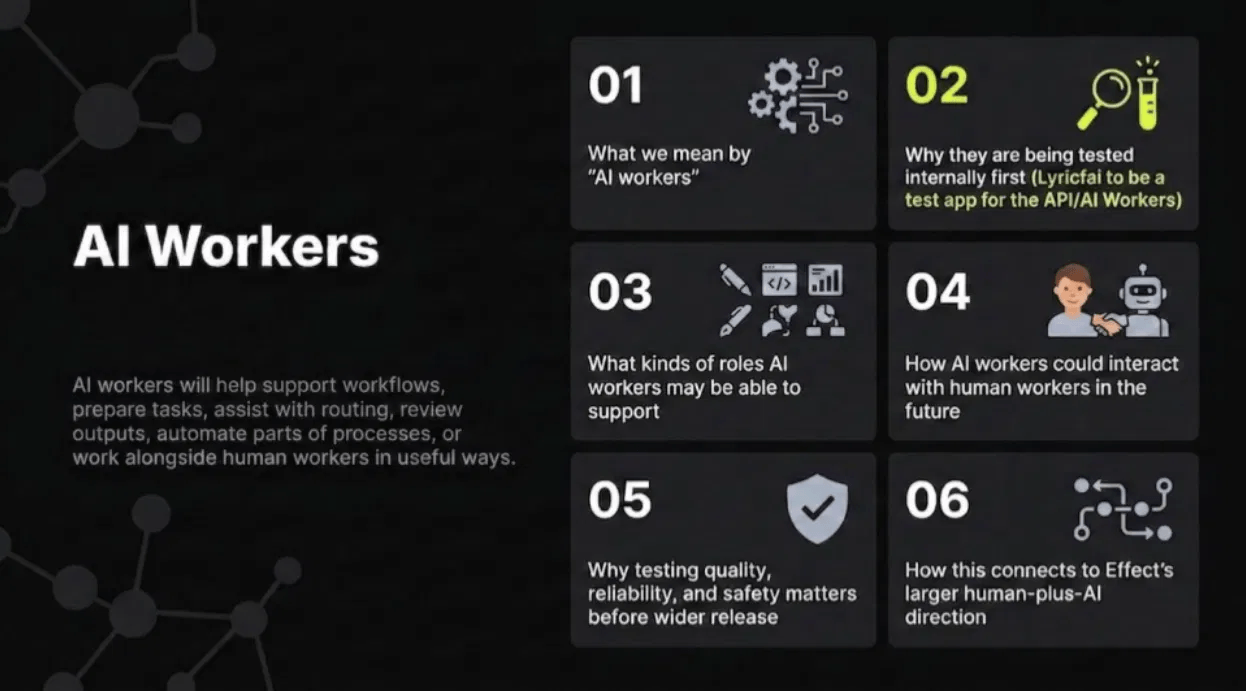
AI workers were another major topic during the call.
Within Effect, an AI worker is treated as a distinct type of worker rather than being presented as a human participant. The goal is to make its role clear, including the model or system behind its work, so requesters can understand where an output came from.
AI workers could be used to prepare tasks, organize information, route work, transcribe content, or complete an initial processing step. The results could then be reviewed, corrected, or validated by a human worker.
Automation is being used where it makes sense, but human oversight will still be needed wherever quality, context, and trust matter.
Direct Infrastructure Access With the Effect CLI
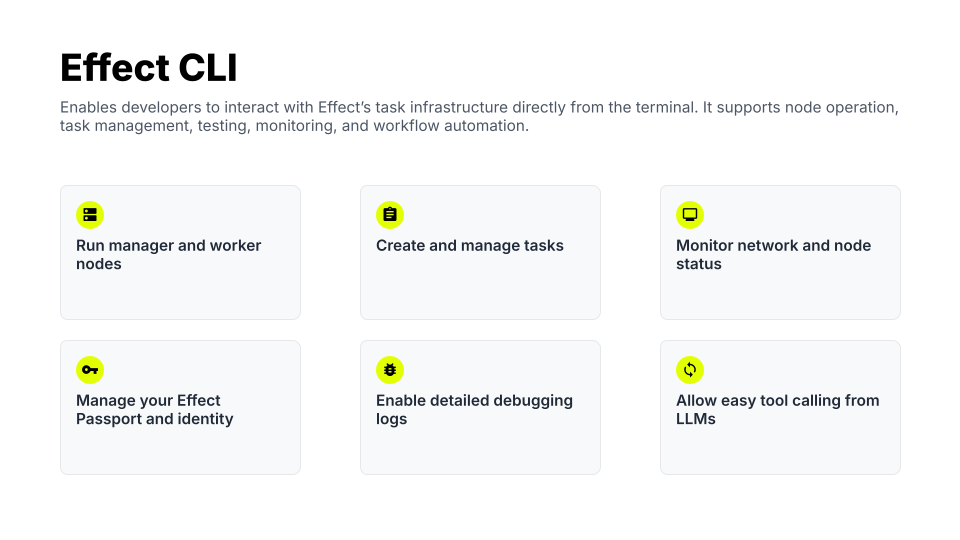
The Effect CLI was also demonstrated. Through the CLI, Effect can be accessed directly from the terminal instead of everything being managed through a visual interface. Account details, wallet balances, node status, network connections, and latency information was shown during the demonstration.
Through the API, Effect can be added to an application as a service. Through the CLI, more direct control over the network and its infrastructure can be provided. This access can be especially useful for testing, automation, node operation, and larger agent-based workflows.
Rethinking the Effect DAO Name
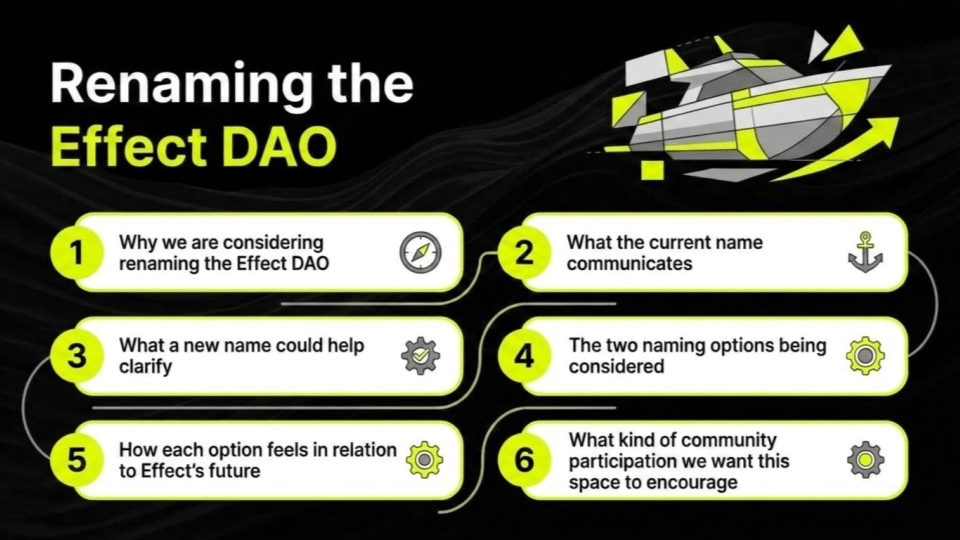
The name "Effect DAO" has been used for years, but a fairly narrow impression can be created by it. The word DAO is often associated with token voting, formal governance, and finished proposals. In reality, community participation usually begins much earlier. Ideas are shared, questions are asked, and proposals are improved through feedback before a vote is ever held.
We are considering a new name that better communicates that broader purpose. Two options were presented during the call: The Port and The Dock.
The Port
The Port was presented as a central gathering place where discussions could be joined, proposals could be shared, and the network's direction could be shaped.
The Dock
The Dock was presented as a more focused working space where ideas could be brought in, discussed, and prepared for their next step.
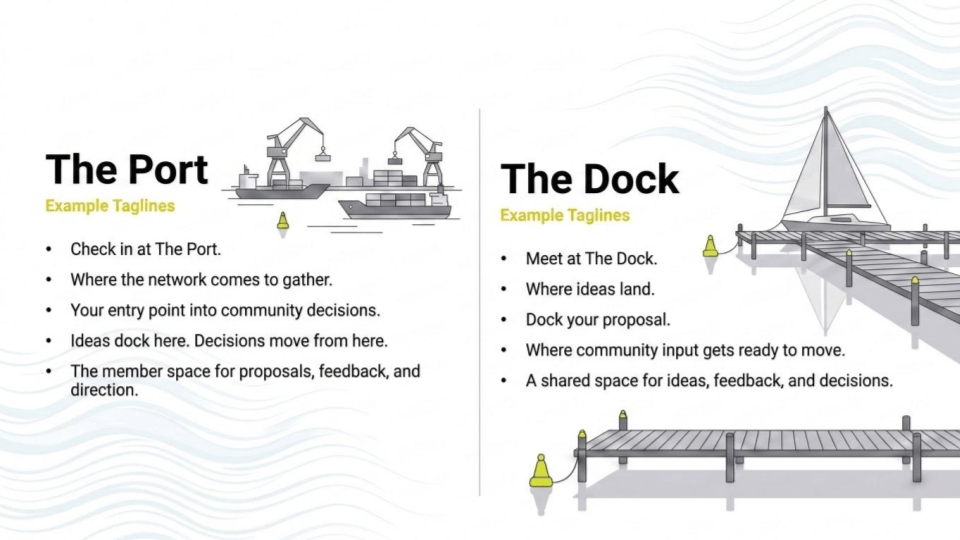
No final name was selected during the call. Both options were shared so a wider conversation could be started about what the space should represent.
Alpha 6 Is Planned for August
One of the most anticipated updates was also shared: Alpha 6 is planned to begin in August.
A gradual rollout is expected rather than one large opening. Alpha testers will be brought into the updated platform, testing will be carried out under real conditions, and tasks will be released in controlled batches. Existing Alpha testers will continue to be included, and new testers will be onboarded.
One Connected Ecosystem
Across the Canva app, API, CLI, AI workers, DAO, and Alpha 6, the same larger direction is being followed.
More ways are being created for developers, applications, AI systems, human workers, and community members to connect through Effect. Automation is being used where it helps, while human judgement and validation remain central.
The July community call showed how these pieces are beginning to come together. Through Alpha 6 and continued testing, more of that vision will be put into practice.
Developers who want to connect their own applications, AI agents, or workflows to the network can sign up for Effect API access.
Get Involved
Want to join the next phase of Effect AI?
Contributors: Sign Up to join the next alpha phase and start earning $EFFECT for real tasks.
Developers & Researchers: Collaborate with us to build or validate high-quality datasets for your AI models and research initiatives.
Organizations: Partner with Effect AI on responsible, mission-aligned data initiatives across a wide range of domains, from AI development to social impact.